
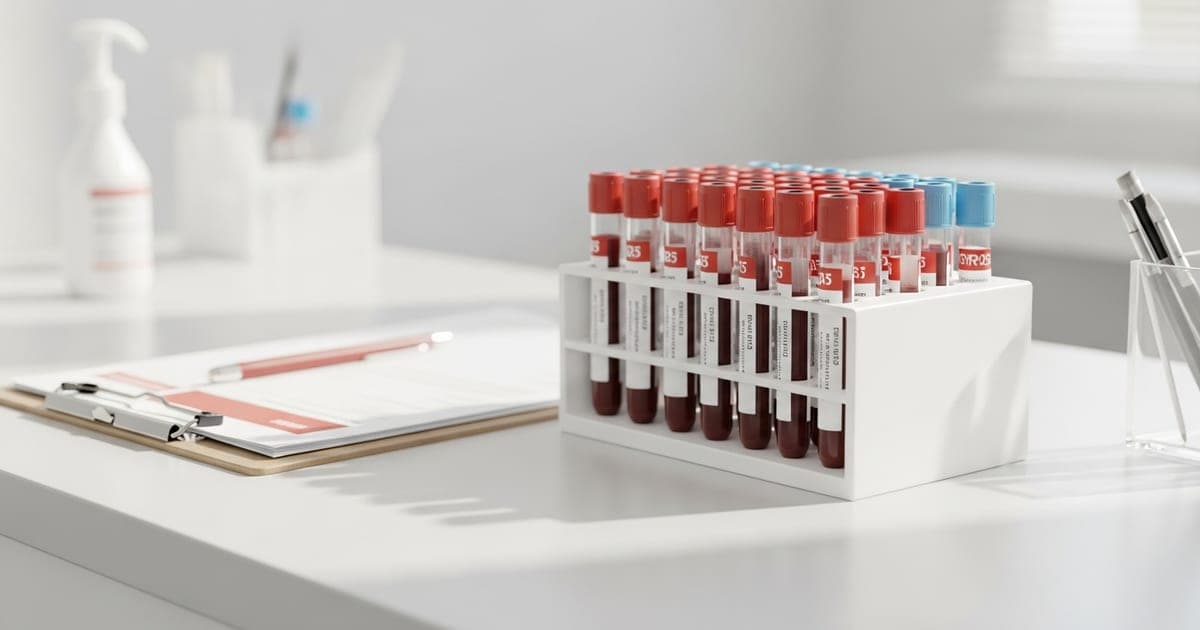
Most people think getting blood work once a year is enough. You go in, get your blood drawn, and are told everything looks “normal.” And for many people, that’s where the conversation ends. But basic blood tests often only catch problems after something is already going wrong. They’re designed to spot obvious issues not early warning signs. That’s where advanced blood work comes in.
What Are Blood Tests?
Blood tests are common medical tests. You may have a blood test as part of a routine physical examination or because you have certain symptoms.
There are many different blood tests. Some tests focus on your blood cells and platelets. Some evaluate substances in your blood such as electrolytes, proteins and hormones. Others measure certain minerals in your blood.
Regardless of why you’re having a blood test, it’s important to remember that blood tests help healthcare providers diagnose health issues. But blood test results aren’t diagnoses. An abnormal blood test result may not mean you have a serious medical condition.
When Would I Need to Have a Blood Test?
Your blood plays a big role in your overall health and contains a lot of information about what may be going on in your body. That’s one reason why blood tests are a common medical test. A healthcare provider may do a blood test because:
- It’s time for your regular physical. During a checkup, your provider may order blood tests to check on your overall health. They may order a blood test that evaluates many parts of your blood, such as a complete blood count (CBC), basic metabolic panel (BMP) or a comprehensive metabolic panel.
- Your provider recommends screening tests. Screening tests are done before you have any symptoms. They may recommend screening tests if you’re at risk of developing certain conditions, such as cancer. For example, if you’re at risk for developing coronary artery disease, your healthcare provider may order several blood tests to evaluate that risk.
- You don’t feel well. If you have specific symptoms, your provider may order blood tests to determine what’s causing them. For example, if you have symptoms that may be signs you’re pregnant, your provider will do a pregnancy test. The blood test looks for a specific hormone your body only ever makes when you’re pregnant.
- You have a medical condition that happens when certain genes change (mutate). Depending on your situation, your blood cells and platelets may show information about the specific changes. Understanding which genes changed may help your provider plan your treatment.
- You’re receiving treatment for a medical condition. Your provider may use regular blood tests to see if treatment is working.
You may have inherited certain genetic mutations that cause medical conditions. Your provider may take blood samples for genetic analysis so you know if you’re at risk of developing a specific condition.
What Do Blood Tests Show?
In a broad sense, a blood test shows changes in your body. Blood test results don’t show a complete picture. Instead, they’re a kind of snapshot. After seeing that snapshot, your provider may do other blood tests to get a closer view. Here’s a glimpse of what your healthcare provider may see with blood tests:
- The tests show if your blood is working as it should. For example, your red blood cells carry oxygen throughout your body. A blood test may show you have low red blood cell levels (anemia). If healthcare providers look at your cells under a microscope, they may see your red blood cells are larger than normal or shaped differently than normal red blood cells. These differences may be signs of blood disorders or blood cancers.
- They show if you have normal levels of enzymes and electrolytes. Enzymes are proteins that help speed up the chemical reactions that build up and break down substances in your body. Electrolytes do several things, such as helping your body regulate chemical reactions and maintaining the balance between fluids inside and outside your cells.
What Is Basic Bloodwork?
Basic bloodwork includes routine tests to check our health. The most common tests are the Complete Blood Count (CBC) and the Basic Metabolic Panel (BMP). These tests help find issues like anemia, infections, and metabolic problems.
Key Components of Basic Tests
Let’s look at some important parts of these tests:
| Test Type | Purpose | Measured Parameters |
|---|---|---|
| Complete Blood Count (CBC) | Evaluates overall health and detects a variety of disorders | Red blood cells, white blood cells, hemoglobin, hematocrit, platelets |
| Basic Metabolic Panel (BMP) | Checks sugar levels, kidney function, and other key bodily functions | Glucose, calcium, electrolytes, kidney function indicators (blood urea nitrogen, creatinine) |
These tests are great for a first look at our health. But, they might not find the cause of complex health problems. That’s why Med Matrix offers detailed bloodwork assessments. These tests give us deeper insights to create personalized treatment plans. We focus on solving the root cause of health issues, not just the symptoms.
What Are Considered “Basic” Blood Tests?
Common Blood Tests Doctors Routinely Order
When most people go in for a routine checkup, the same familiar tests tend to show up again and again:
Complete Blood Count (CBC)
Basic or Comprehensive Metabolic Panel (BMP/CMP)
Lipid Panel
Fasting Blood Glucose
Thyroid-Stimulating Hormone (TSH)
These tests are useful, no doubt. They can detect infections, anemia, electrolyte imbalances, kidney or liver dysfunction, and advanced metabolic issues. If something is seriously off, these tests often catch it.
But that’s also their limitation they’re designed to catch problems once they’ve crossed a certain threshold. They’re not great at spotting early warning signs.
Limitations of Basic Blood Tests
Basic blood tests focus on specific symptoms and indicators. They are useful at first but might not show the whole picture of health. For complex symptoms like chronic fatigue or unexplained pain, they might miss conditions like fibromyalgia or lupus. This shows why in-depth blood analysis is key to find subtle biomarkers that basic tests miss.
Narrow Focus on Symptoms
Traditional blood tests aim to find common conditions and their obvious markers. But, this narrow focus can lead to missing more complex health issues. For example, many tests don’t account for biases in certain assays. Studies in endocrinology show that differences in assay systems can cause variable results, even for the same test. This highlights the need for a broader approach.
Missed Opportunities for Deeper Insight
Standard blood tests often miss the root causes of symptoms. For instance, cortisol assays can be affected by interference, making it hard to diagnose adrenal disorders. Also, variability in total vitamin D assays can make results inconsistent, making it tough for doctors to make decisions. To overcome these challenges, personalized bloodwork is essential for a detailed evaluation, revealing health aspects that standard tests miss.
Different laboratories use different equipment and methods, leading to analytical variation. The evolving nature of assay performance over time, due to changes in calibrators or reagents, shows the need for advanced bloodwork. This detailed and tailored examination is crucial for achieving the best health outcomes.
| Assay System | Variability in Results | Implications |
|---|---|---|
| Immunoassay | Prone to interference and biases | Potential for inaccurate diagnosis |
| Mass Spectrometry | More precise but costlier | Better detection of subtle biomarkers |
| Total Vitamin D Assays | Highly variable results | Challenges in managing vitamin D levels |
While basic blood tests are useful at first, they can’t diagnose complex health issues. Their limitations highlight the need for more detailed analysis through advanced techniques. This shift can improve diagnostic accuracy and support personalized medical treatments, leading to better health outcomes for patients with complex symptoms.
The Need for Advanced Bloodwork
Healthcare is always getting better, and we need more detailed tests. Traditional tests can’t always find complex problems. That’s why advanced blood panels and innovative blood tests are important. They give us a detailed look at our health.
We use advanced bloodwork and the latest in blood diagnostics to explore your health’s biochemical landscape. Learn more about advanced testing in South Portland.
Going Beyond Conventional Testing
Advanced bloodwork looks deeper than regular tests. It checks for hormonal imbalances, nutrient gaps, and inflammation. For example, a basic lipid profile only shows cholesterol levels. But an advanced blood panel looks at specific lipids, helping us understand heart disease risk better.
These tests can find hidden problems like thyroid issues or adrenal fatigue. This lets doctors give more targeted treatments.
Identifying Underlying Conditions
Innovative blood tests help find problems that regular tests miss. High blood pressure, high cholesterol, and abnormal blood sugar levels hint at deeper issues. Advanced tests are needed to find the real causes and create personal treatment plans.
| Condition | Standard Test | Advanced Bloodwork |
|---|---|---|
| Heart Disease | Basic lipid profile | Detailed lipid profiling, specific lipid subfractions |
| Kidney Problems | Basic metabolic panel | Comprehensive metabolic analysis |
| Diabetes | Glucose level | Advanced glucose metabolism assessment |
When Should I Have A Blood Test?
That depends on your situation and your overall health. Most healthcare providers recommend annual physical examinations that may include a complete blood count test. In general, providers recommend tests based on what they know about you. For example, they may recommend regular blood glucose tests if you have overweight (a Body Mass Index or BMI over 25) or obesity (a BMI greater than 30).
What Should I Do To Prepare For My Blood Test?
That depends on the kind of test you’re having. For example, some blood tests require you to fast for several hours before the test. You may be asked not to drink any liquids apart from a few sips of water. Most blood tests don’t require fasting, but it’s a good idea to ask your healthcare provider what to avoid before your blood test. Other steps may include:
- If you don’t need to fast before your blood test and you’re able to drink water, try to drink as much as you can before your test. Being well-hydrated may make it easier for healthcare providers to obtain blood.
- Use moisturizer on your arms. It may make it easier for your provider to insert the needle and obtain blood.
- Boost your blood pressure right before your blood test by doing some gentle exercise while waiting to be called in for your test.
What Happens During Blood Tests?
Phlebotomists — healthcare providers with special training in drawing blood — do blood tests. During the blood test process:
- You’ll sit in a chair with an armrest where you can stretch your arm out in front of you.
- If you’re wearing a long-sleeve shirt, you’ll roll up your sleeve past your elbow.
- The phlebotomist will wipe an antiseptic liquid in the bend of your arm (on the other side of your elbow) and put an elastic band around your arm (above your elbow).
- They may ask you to make a fist to encourage blood flow.
- They’ll insert a needle into your arm. This typically happens very quickly. You may feel the needle go into your skin. This is called venipuncture.
- The blood flows into a tube that’s sealed and sent to a lab for analysis. The phlebotomist may need to take several samples of your blood, depending on the blood tests your healthcare provider ordered.
- Once the phlebotomist has obtained enough blood, they’ll remove the stretchy band that’s strapped around your arm and removes the needle.
- Then, they’ll put a bandage on the area where the needle went into your skin.
Are There Different Ways To Do Blood Tests?
All blood tests involve obtaining blood samples. Venipuncture (from a vein) is the most common procedure. Other procedures are:
- Finger stick: Your provider pricks one of your fingers with a needle to collect a tiny amount of blood. The blood sample is saved on a special strip of paper that’s sent to a lab for analysis.
- Heel stick: All babies born in the U.S. have blood tests by pricking their heel with a needle to obtain a blood sample.
- Arterial blood gas test: In this test, providers take blood from one of your arteries instead of a vein.
How Much Blood is Taken During Blood Tests?
That depends on the kind of blood test. On average, a complete blood count (CBC) test may take as much as 30 milliliters (mL) of blood. It may sound like a lot of blood, particularly if you’re watching your blood flow into several sample tubes. But it’s not — the average adult has 4,500 to 5,700 milliliters of blood in their body.
Do Blood Tests Hurt?
They can, depending on the kind of blood test you have. It’s important to remember that phlebotomists receive training on how to obtain blood samples quickly and without causing pain.
That said, tests that take blood from an artery tend to hurt more than tests that take blood from a vein. And with venipuncture, taking blood from a vein may hurt a bit if the phlebotomist has trouble inserting the needle into your vein. Let your phlebotomist know if you have any discomfort. They’ll try different ways to obtain samples of your blood.
I’m always anxious about having blood tests. What can I do to relax?
Many people feel anxious about blood tests. Some ways to cope include:
- Understanding why you’re having specific blood tests.
- Taking deep breaths as the needle goes into your arm.
- Looking away so you don’t see the needle enter your arm.
- Finding a way to distract your attention, such as silently counting to 10.
What happens after my blood test?
Your provider will put a bandage on the spot where the needle went in. Depending on the blood test, they may recommend you rest for a minute or so before standing up and leaving.
When will I know my test results?
That depends on the blood test and your provider’s preferences. Your provider likely will explain how you’ll receive results. Some blood test results are available within a few hours. Others, like genetic test results, typically take longer.
Some healthcare organizations offer online access to test results. But your provider may prefer to discuss your results in a telephone conversation or in person.
My healthcare provider wants to talk to me about my test results. Does that mean something’s wrong?
Not necessarily. If your tests were part of your routine medical checkup, your healthcare provider may want to review results with you. They may have recommendations about ways you can improve your health. If you’ve received treatment for a medical condition, your provider may want to discuss your test results in detail and put the results in context.
How Speedy Sticks Helps
Speedy Sticks removes the access barrier by bringing professional blood draws directly to patients.
We support advanced blood work through:
- At-home blood draws
- Mobile phlebotomy for seniors
- Pediatric blood collections
- Concierge and specialty lab kit draws
- Nationwide mobile services
Patients get their blood work done comfortably at home. Providers get reliable, high-quality collections without delays.