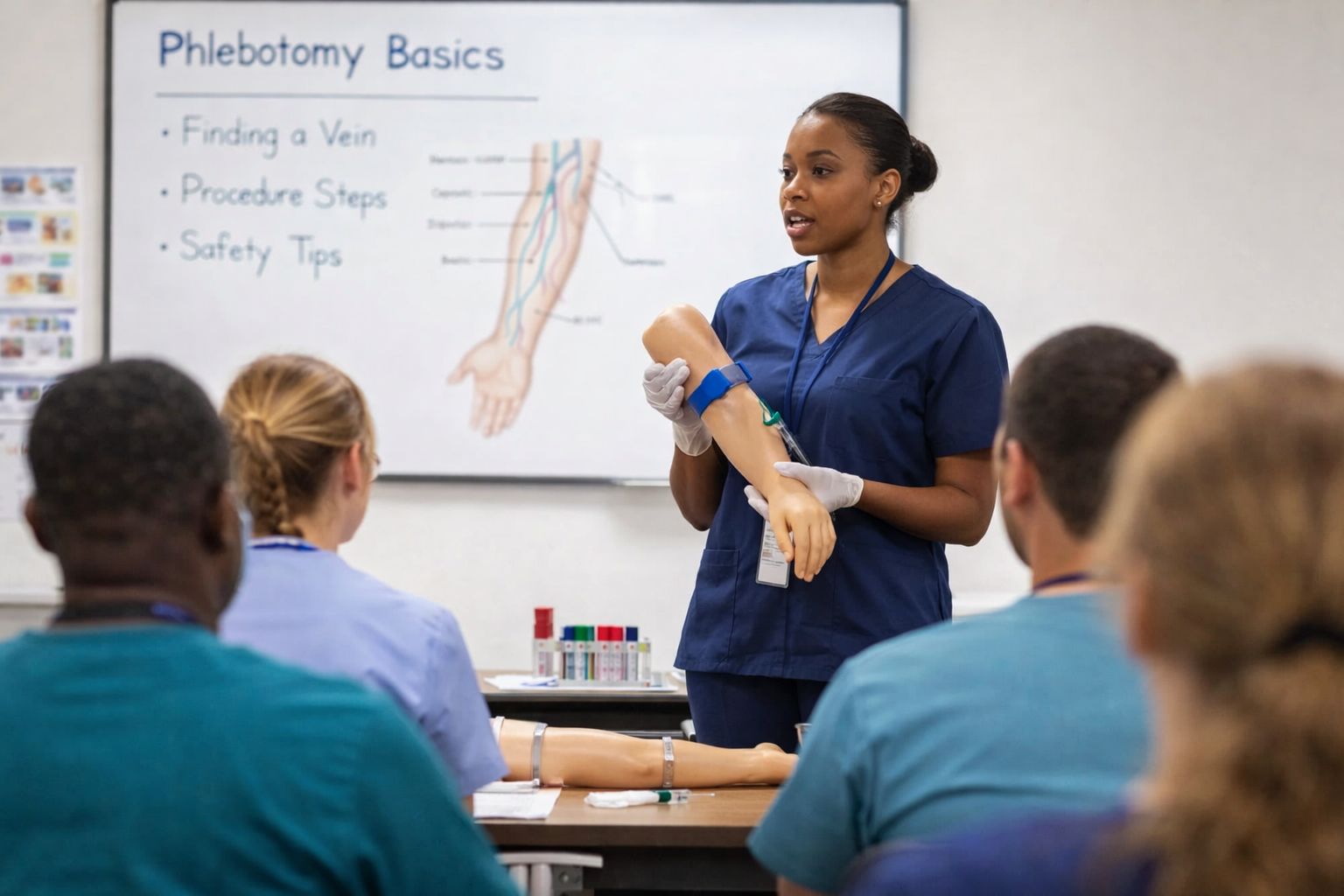
If you’re exploring a career in healthcare, chances are you’ve come across roles like phlebotomist. At Speedy Sticks, we’re all about helping aspiring healthcare professionals navigate their journey with confidence. Whether you’re deciding which role suits your skills or just wondering how to say “phlebotomy” without tripping over your tongue, you’re in the right place. Let’s break it all down no fluff, just the facts with a side of personality.

What is Phlebotomy?
Phlebotomy is the practice of drawing blood for diagnostic testing, transfusions, donations, or research. It’s the behind the scenes superhero role that helps doctors diagnose diseases, monitor conditions, and even match people for life-saving blood transfusions.
Phlebotomists often work in:
Hospitals
Diagnostic laboratories
Private clinics
Blood donation centers
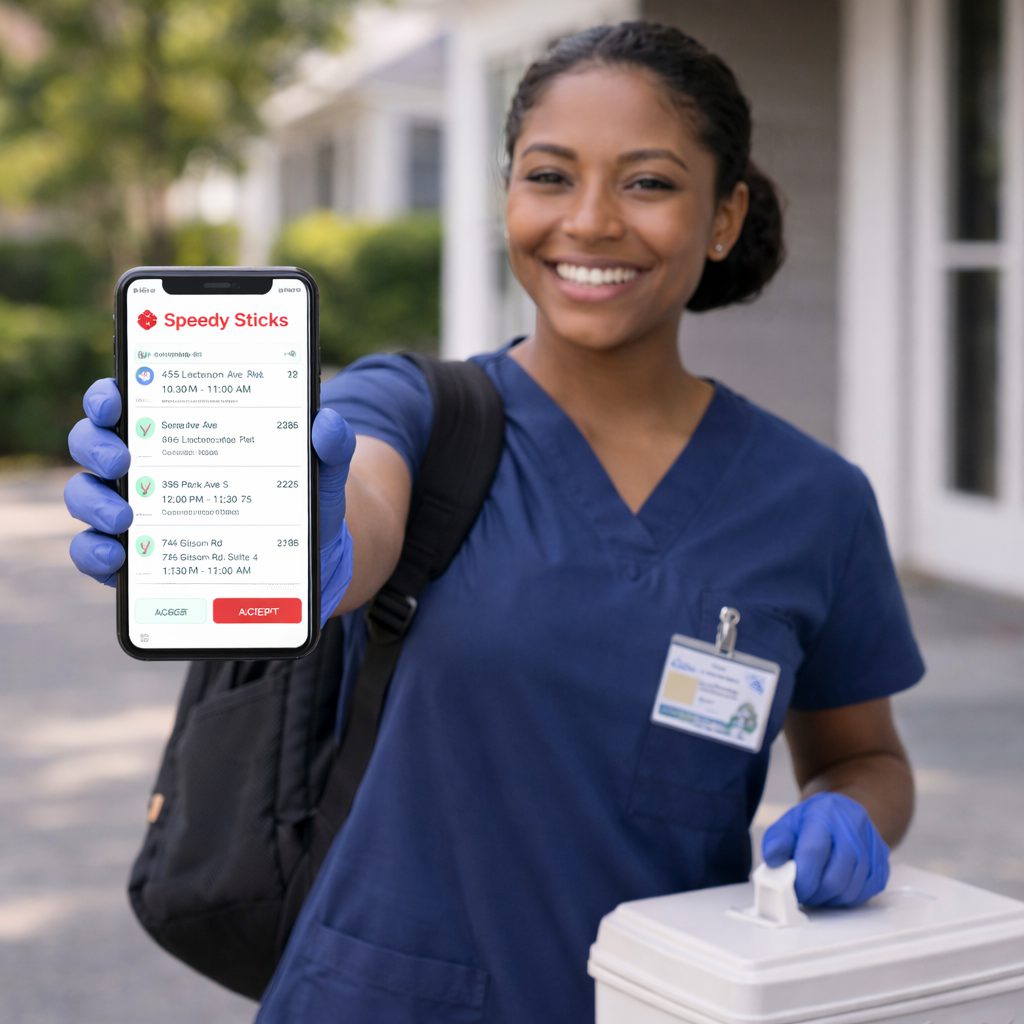
Mobile healthcare services (like Speedy Sticks!)
The work is precise and procedure focused. You’ll be trained to find veins, collect blood efficiently, calm nervous patients, and handle samples with extreme care. You won’t be diagnosing anyone but your role is critical to patient outcomes.
If you’re someone who loves organization, attention to detail, and doesn’t mind a little blood, phlebotomy might be your sweet spot.
How Do You Pronounce “Phlebotomy”?
Let’s clear this up right away—phlebotomy is not as hard to say as it looks. All those letters might make you pause, but it’s actually pronounced:
/flə-ˈbä-tə-mē/
FLUH-BAH-tuh-mee
Break it down like this:
Phle = “Fluh”
bot = “Bah”
omy = “tuh-mee”
Say it with us: Fluh-BAH-tuh-mee.
Still sounds weird? Try thinking of it like this: “Flow of blood to me” — okay, it’s a stretch, but sometimes a silly phrase helps you lock it in.
Knowing how to say it properly can boost your confidence especially during interviews, classes, or patient interactions. After all, if you’re going to build a career in it, you should sound like you know what you’re talking about.
The Role of a Phlebotomist
So, what does a phlebotomist really do all day?
A typical day might include:
Greeting patients and explaining procedures
Verifying patient identity and matching test orders
Drawing blood using venipuncture techniques
Labeling vials correctly and safely
Preparing specimens for lab transport
Maintaining clean, sanitary workspaces
Calming nervous or fearful patients (especially kids!)
You might work in a fast-paced ER, a calm private clinic, or even provide mobile phlebotomy services (something Speedy Sticks specializes in). It’s a great fit for people who are calm under pressure, love routines, and are looking for flexibility in the healthcare field.
Phlebotomist
| Feature | Phlebotomist | |
|---|---|---|
| Main Role | Draw blood, manage specimens | |
| Patient Interaction | Short, mostly during blood draw | |
| Education Time | 4-12 weeks (varies by program) | |
| Work Environment | Labs, clinics, hospitals, mobile units | |
| Physical Demands | Light to moderate | |
| Emotional Demands | Moderate | |
| Certification | CPT (Certified Phlebotomy Technician) | |
| Career Advancement | Lab tech, donor specialist, medical assistant |
Comparing the Skills Required
A phlebotomist needs:
Strong hand-eye coordination
Steady hands for needle work
Communication skills (especially with nervous patients)
Attention to detail for labeling and tracking samples
Workplace Settings: Where Will You Thrive?
Phlebotomists often work in:
Diagnostic labs
Blood banks
Physician offices
Mobile settings (like Speedy Sticks!)
Which Career Pays More?
Let’s talk money.
Phlebotomists earn around $37,000 – $50,000 annually on average, depending on location, experience, and certifications.
Training Time: How Long Does It Take?
One big plus for both careers? Short training time.
Phlebotomy: Some programs are as short as 4 weeks, with national certification available through organizations like NHA or ASCP.
Career Growth & Advancement Opportunities
Phlebotomists can advance to lab technician roles, supervisory positions, or even teach phlebotomy.
Job Demand: Who’s Hiring?
According to the Bureau of Labor Statistics, both fields are growing:
Phlebotomist jobs expected to grow 10%+ in the next decade.
With the rise of mobile healthcare services and home-based care, both roles are expanding beyond traditional settings.
Which Role is Right for You?
Ask yourself:
Do you want to work more independently or as part of a team?
Are you more procedure-focused or patient-care focused?
Do you handle bodily fluids and needles well?
If you love efficiency, clean procedures, and flexible schedules, phlebotomy might be your lane.
Why Choose Phlebotomy with Speedy Sticks?
Here at Speedy Sticks, we don’t just talk about healthcare—we live it. We offer:
Flexible phlebotomy training programs
Opportunities to work in mobile healthcare
Support from professionals in the field
Real-world experience that prepares you from day one
Whether you’re just starting or looking to switch careers, our hands-on training and job placement help you hit the ground running.
Is phlebotomy easier ?
Phlebotomy is less physically demanding and more procedural
How long does it take to become a certified phlebotomist?
Most phlebotomy programs can be completed in 4 to 12 weeks, depending on the school and schedule.
Can I switch from CNA to phlebotomy later?
Absolutely! Many CNAs add phlebotomy to their skillset for more job opportunities or to change focus.
Do phlebotomists work night shifts?
Yes, especially in hospitals or 24/7 labs. But many also work regular business hours or have flexible mobile schedules.
Is phlebotomy a good first step into healthcare?
Definitely. It’s quick to train, in high demand, and gives you clinical experience without needing a degree.
Conclusion
If you’re looking for a role that mixes flexibility, technical skill, and a strong future job outlook, phlebotomy with Speedy Sticks could be the perfect match.
And now, you can even say it right: FLUH-BAH-tuh-mee.
Speedy Sticks offers licensed, at-home blood draws for advanced cardiovascular testing, including ApoB and lipid panels.
 Nationwide coverage Professional phlebotomists Convenient, compliant collections
Book an at-home blood draw today
Say Goodbye To Waiting Rooms And Long Lines. Speedy Sticks offers at-home testing.