
You finally get your lab results back. Your doctor smiles and says, “Good news—your cholesterol is normal.” Relief washes over you. You check the box in your head labeled heart disease risk and move on with life.
But what if that reassurance is incomplete?
Every year, thousands of people suffer heart attacks despite being told their cholesterol was fine. If that sounds confusing or unsettling you’re not alone. Let’s unpack why normal cholesterol doesn’t always mean a healthy heart, and why LDL-C alone may be telling only half the story.

What Is LDL-C
LDL-C stands for low-density lipoprotein cholesterol—the infamous “bad” cholesterol. It’s been the go-to metric in traditional lipid panels for decades. Your doctor orders a standard cholesterol test, and it usually comes back with four basic numbers: total cholesterol, LDL-C, HDL-C, and triglycerides. Among them, LDL-C gets the most attention because of its long-standing association with cardiovascular risk.
Why “Normal” Cholesterol Numbers Can Be Misleading
When doctors say your cholesterol is normal, they’re usually referring to a standard lipid panel. This test looks at:
Total cholesterol
LDL-C (low-density lipoprotein cholesterol)
HDL-C (high-density lipoprotein cholesterol)
Triglycerides
If your LDL-C falls below a certain cutoff—often under 100–130 mg/dL—you’re labeled “low risk.”
Sounds straightforward. But here’s the catch.
What LDL-C Actually Measures
LDL-C measures the amount of cholesterol inside LDL particles, not how many LDL particles are circulating in your blood.
That distinction matters—a lot.
What is More Important, Total Cholesterol or LDL?
While both are routinely measured, LDL cholesterol is more important when assessing cardiovascular risk. Total cholesterol includes LDL, HDL, and a portion of your triglycerides. A high total cholesterol could be due to high HDL (the “good” cholesterol), which isn’t necessarily a problem. However, elevated LDL—especially small, dense LDL particles—is strongly linked to heart disease. That said, neither should be viewed in isolation. For the most accurate picture, advanced markers like ApoB or LDL-P are far superior.
Can You Have Blocked Arteries With Normal Cholesterol?
Yes—absolutely. Many people with significant coronary artery disease have what is considered “normal” cholesterol levels. Traditional panels can miss critical risk factors like elevated LDL particle number, ApoB, inflammation (hs-CRP), or Lp(a). A coronary calcium scan (CAC) is one of the best ways to directly visualize plaque buildup and assess your true arterial health.
Why do I have high LDL cholesterol when I eat healthy all the time?
There could be several reasons. First, genetics play a massive role—conditions like Familial Hypercholesterolemia (FH) can cause elevated LDL regardless of diet. Second, certain “healthy” diets high in saturated fat (like keto or paleo) can spike LDL-C in some people. Also, if your body produces too many small LDL particles, your LDL-C may rise even with clean eating. Advanced testing can uncover the real cause.
How People With Normal Cholesterol Still Get Heart Disease
Real-World Scenarios
You’ve probably heard stories like:
“He ran marathons and still had a heart attack.”
“Her cholesterol was perfect—then boom.”
These aren’t rare exceptions. They’re signals that the system is incomplete.
The Comfort Trap of Standard Lab Ranges
Lab “normal” ranges are based on population averages—not optimal health. If most of the population is metabolically unhealthy, the average becomes a poor benchmark.
It’s like grading on a curve where everyone’s struggling. Passing doesn’t mean thriving.
Silent Risk Accumulation Over Time
Atherosclerosis develops quietly over decades. By the time LDL-C rises, damage may already be done.
LDL Normal but Heart Attack: How Does This Happen?
Small Dense LDL Particles
Small, dense LDL particles are more dangerous than large, fluffy ones. They:
Penetrate artery walls more easily
Oxidize faster
Trigger stronger inflammatory responses
You can have normal LDL-C and still have a high number of small, dense LDL particles.
Insulin Resistance and Metabolic Health
High insulin levels drive cholesterol particles into arteries. This explains why people with:
Prediabetes
Belly fat
Fatty liver
often have heart disease despite “normal” cholesterol.
What is the latest recommendation for LDL cholesterol?
As of 2025, the most updated guidelines from the American College of Cardiology and American Heart Association continue to emphasize lower LDL-C levels for higher-risk individuals. For those with a history of heart disease or diabetes, LDL-C should ideally be below 70 mg/dL. However, newer recommendations are also focusing on ApoB levels and LDL-P as more accurate indicators of risk, moving beyond just cholesterol concentration.
Advanced Cholesterol Testing: A Game-Changer
Standard cholesterol tests are like flipping through the table of contents in a book—you get a rough idea of what’s inside, but no real detail. Advanced cholesterol testing gives you the full story.
Here are the top advanced tests to consider:
ApoB – Direct count of atherogenic particles
LDL-P (via NMR) – Measures total LDL particle number
hs-CRP – Assesses inflammation
Lp(a) – Genetic cholesterol marker, often missed
Fasting insulin / HOMA-IR – Early markers of metabolic dysfunction
Each of these tests adds a layer of insight that standard panels miss entirely. Together, they provide a 360-degree view of your cardiovascular health.
The good news? These tests are becoming more affordable and accessible, especially through direct-to-consumer labs. You don’t need to wait for a crisis to justify deeper testing. If you have symptoms, a family history, or just want peace of mind—it’s worth it.
Conventional Testing vs. Advanced Testing: A Side-by-Side Comparison
| Feature | Standard Lipid Panel | Advanced Cholesterol Testing |
|---|---|---|
| Measures LDL-C directly | ❌ Usually calculated | ✅ (ApoB / LDL-P measured) |
| LDL Particle Number | ❌ Not included | ✅ LDL-P via NMR |
| Inflammation (hs-CRP) | ❌ Not included | ✅ Included |
| ApoB Measurement | ❌ Not included | ✅ Included |
| Lp(a) Genetic Risk | ❌ Not included | ✅ Included |
| Cost | ✅ Covered by insurance | ⚠️ May require out-of-pocket |
| Predictive Power | ⚠️ Limited | ✅ Significantly higher |
If you truly care about prevention—not just treatment—advanced testing is the way forward.
What to Do If You’re “Normal” But Still Worried
So your labs are “normal,” but your gut tells you something’s off. Maybe it’s a strong family history, symptoms like fatigue or shortness of breath, or just a sense that you’re not as healthy as the numbers suggest.
Here’s what to do:
Request advanced tests: ApoB, LDL-P, hs-CRP, and Lp(a) are a great place to start.
Look at ratios: Check your TG/HDL ratio and non-HDL cholesterol.
Track insulin resistance: Fasting insulin or HOMA-IR can uncover early metabolic issues.
Don’t ignore family history: Advocate for yourself even if your doctor says “you’re fine.”
Get a coronary calcium scan (CAC): This imaging test shows actual plaque buildup in arteries.
Being proactive can literally save your life. Don’t wait for a heart attack to prove your instincts right.
Preventative Action: Steps You Can Take Today
Knowledge is power—but action is everything. Here’s how to protect your heart, even if your cholesterol is “normal”:
Clean up your diet: Prioritize whole foods, healthy fats, and low glycemic carbs. Cut added sugar and ultra-processed junk.
Move daily: Aim for 30–60 minutes of movement, mixing cardio with strength training.
Sleep like it matters: Poor sleep drives inflammation and insulin resistance.
Manage stress: Chronic stress spikes cortisol, raises blood sugar, and worsens lipid profiles.
Supplements: Consider omega-3s, berberine, magnesium, and CoQ10—but talk to a practitioner first.
Test, don’t guess: Repeat labs every 6–12 months, especially if you’re making changes.
Small, consistent changes today can prevent a devastating event tomorrow.
Why This Matters: A Wake-Up Call for the “Healthy”
Cholesterol myths die hard. For decades, we’ve relied on total cholesterol and LDL-C as our north stars. But the truth is, they often miss the mark. Too many people are walking around with “normal” labs and a false sense of security—right up until the moment they become another heart attack statistic.
It’s time to redefine what “normal” means. Normal cholesterol doesn’t guarantee normal risk. If you care about your long-term health, you’ve got to look deeper—into particle numbers, inflammation, genetics, and metabolism.
And most importantly—don’t wait for permission to advocate for yourself.
What are the new LDL guidelines in 2025?
The 2025 guidelines emphasize personalized risk assessment. This means LDL-C targets are now tailored based on age, genetics, existing conditions, and other risk factors. In general:
Low risk: LDL-C < 100 mg/dL
Intermediate risk: Aim for < 100 mg/dL
High risk (e.g., existing heart disease): < 70 mg/dL
Very high risk (multiple risk factors): < 55 mg/dL
These targets are supplemented by ApoB and LDL-P for more precise risk stratification.
What level of LDL needs treatment?
That depends on your overall risk. For someone with no other risk factors, LDL-C over 160 mg/dL might trigger lifestyle intervention. But for those with existing cardiovascular disease or diabetes, treatment may begin if LDL-C is above 70 mg/dL. However, modern cardiologists now consider ApoB levels above 80–90 mg/dL as treatment thresholds, even if LDL-C is “normal.”
Which is more important, triglycerides or LDL cholesterol?
Both matter, but in different ways. LDL-C is more directly tied to plaque formation, while high triglycerides are a strong marker of insulin resistance and metabolic dysfunction. If your triglycerides are high and HDL is low, this often signals deeper issues that also impact LDL particle number and size. It’s not a competition—understanding both gives a more complete view.
Is LDL-C the same as total cholesterol?
No, not at all. LDL-C is just one component of total cholesterol. Total cholesterol includes:
LDL-C (low-density lipoprotein cholesterol)
HDL-C (high-density lipoprotein)
VLDL (very low-density lipoprotein, often calculated using triglycerides)
So even if your total cholesterol is high, it could be due to high HDL (which is good). That’s why breaking down the numbers and understanding the context is so important.
Can stress affect LDL cholesterol?
Yes, stress absolutely affects cholesterol. Chronic stress raises cortisol levels, which can lead to higher blood sugar, insulin resistance, and increased LDL-C and triglycerides. It also promotes inflammation—another huge driver of heart disease. Even if you’re doing everything else right, long-term stress can sabotage your cardiovascular health. Managing stress is just as important as managing your diet or exercise.
Can you have blocked arteries with a perfect cholesterol panel?
Yes—and it happens more often than you’d think. Traditional cholesterol panels can miss high ApoB, elevated LDL-P, or chronic inflammation. You could also have elevated Lp(a), a genetic lipoprotein not picked up in routine tests. This is why coronary calcium scoring, advanced lipid testing, and inflammatory markers are critical if you want to detect risk before a heart attack strikes.
Can you have heart disease with normal cholesterol?
Yes. Many people suffer heart attacks or develop cardiovascular disease with “normal” LDL-C levels. Advanced markers like ApoB, LDL-P, and hs-CRP offer better risk assessment.
Is ApoB testing better than LDL-C?
Absolutely. ApoB reflects the total number of atherogenic particles and is a stronger predictor of cardiovascular events than LDL-C.
How do I know if I need advanced testing?
If you have a family history of heart disease, symptoms, metabolic issues, or just want deeper insight—advanced testing is highly recommended.
What causes high ApoB even with normal LDL-C?
This typically means you have many small, dense LDL particles that carry less cholesterol per particle—raising risk without raising LDL-C.
Can diet and lifestyle lower ApoB and LDL-P?
Yes. A nutrient-dense diet, regular exercise, weight loss, and stress reduction can significantly improve your lipid profile—including particle numbers.
Conclusion
Heart disease doesn’t care about your “normal” cholesterol. It doesn’t care that your LDL is under 100 or that your doctor said, “you’re good.” The truth is far more complex—and far more dangerous—than we’ve been led to believe.
Advanced tests like ApoB, LDL-P, hs-CRP, and Lp(a) are revealing risks hiding in plain sight. Metabolic dysfunction, insulin resistance, and inflammation are the real drivers of cardiovascular disease—and they’re often invisible in a basic lipid panel.
So don’t settle for standard. Don’t wait for a scare. Get curious, get tested, and take control of your health. Because when it comes to your heart, “normal” isn’t always safe.
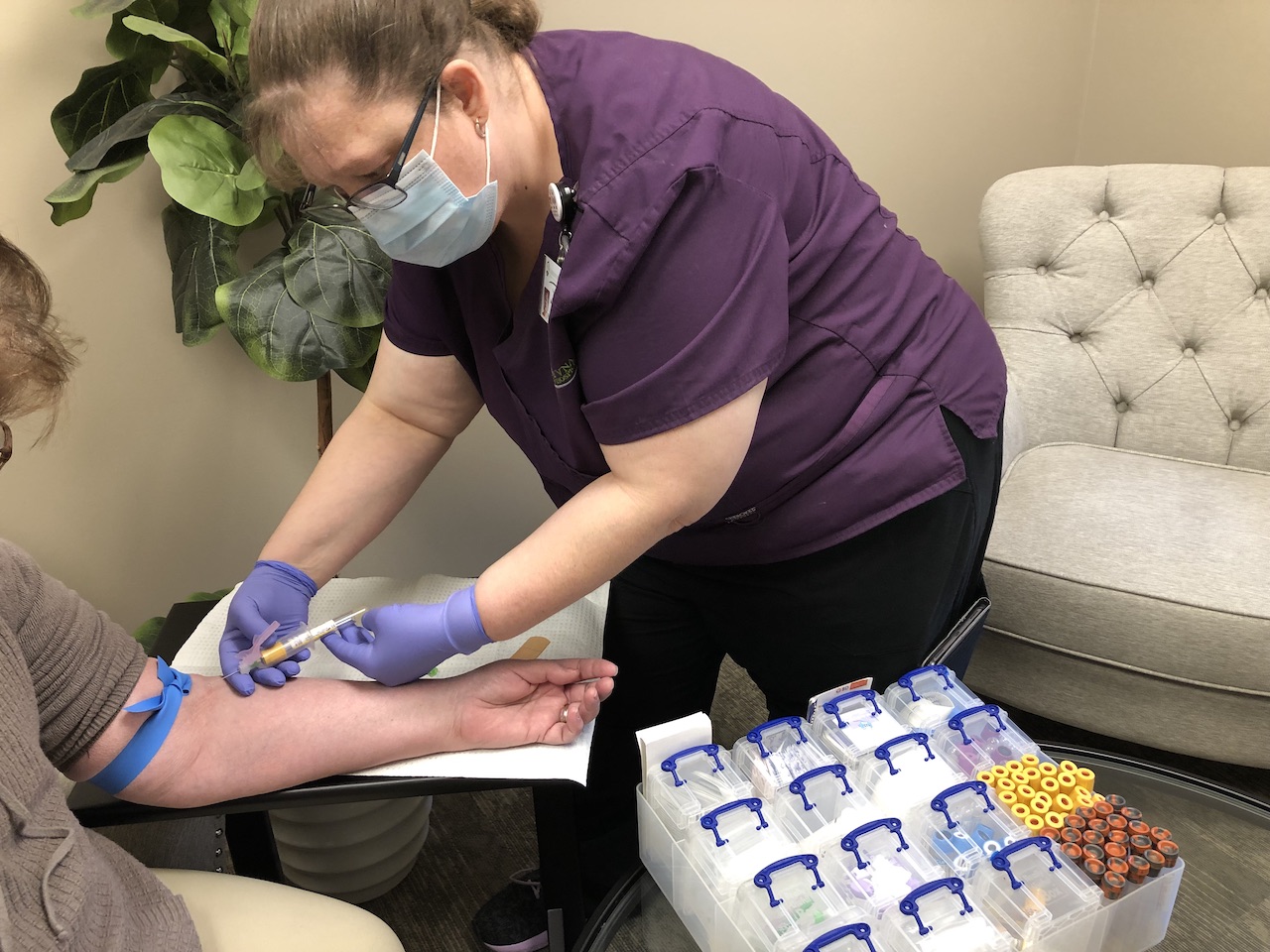
Speedy Sticks offers licensed, at-home blood draws for advanced cardiovascular testing, including ApoB and lipid panels.
✔ Nationwide coverage
✔ Professional phlebotomists
✔ Convenient, compliant collections
Book an at-home blood draw today
Say Goodbye To Waiting Rooms And Long Lines. Speedy Sticks offers at-home testing.