
If you’ve been told your LDL cholesterol is “normal” but your doctor still seems concerned or mentioned ApoB you’re not alone. More clinicians are shifting away from LDL cholesterol alone and toward ApoB as a more accurate way to assess heart disease risk. Here’s what ApoB really measures, how it compares to LDL, and why it’s becoming a go-to marker in modern cardiovascular risk assessment.

What Is ApoB?
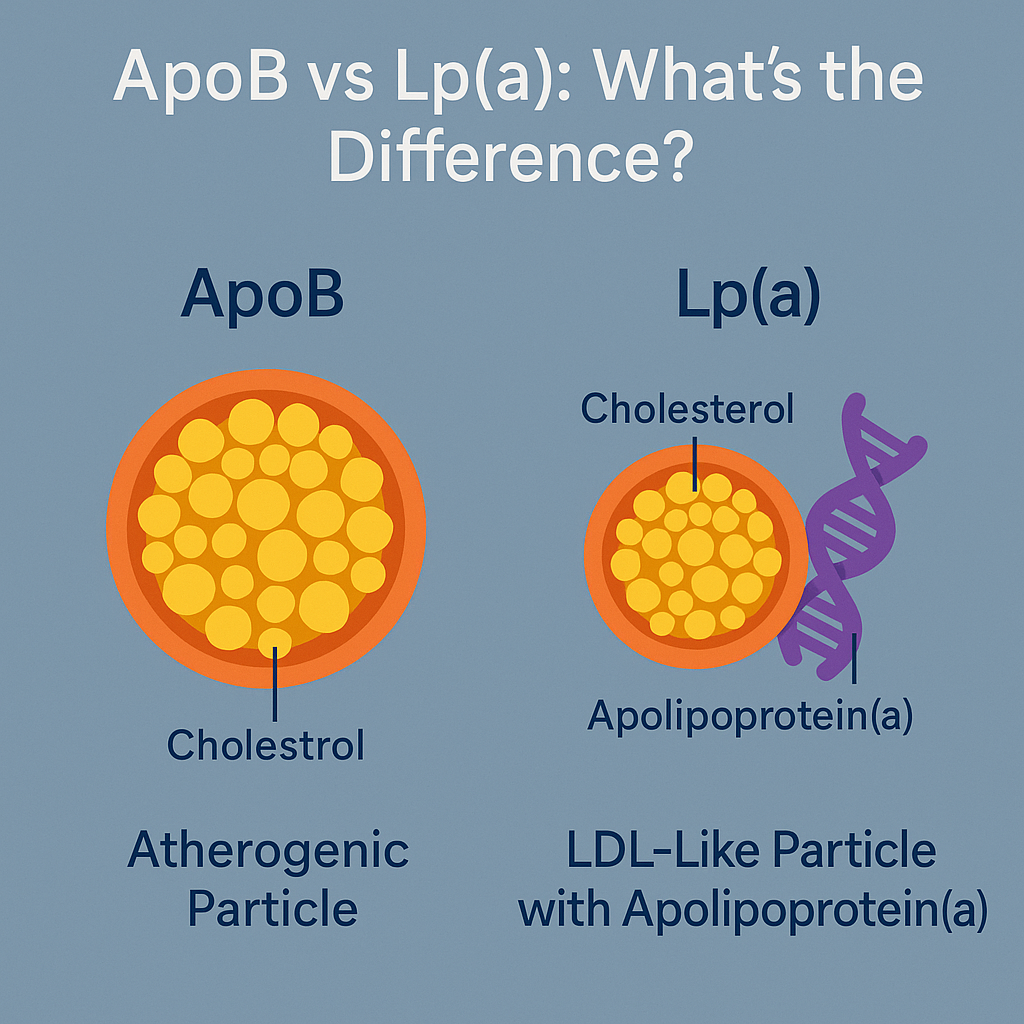
ApoB (apolipoprotein B) is a protein found on every cholesterol particle that can cause plaque buildup in your arteries.
ApoB is endorsed by major cardiology guidelines as a risk-enhancing marker when LDL-C underestimates true risk.
Think of it this way:
Cholesterol travels through your bloodstream in particles.
Each harmful particle has exactly one ApoB protein.
Measuring ApoB tells you how many artery-damaging particles are actually present.
More ApoB = more particles = higher risk of plaque formation and heart disease.
This makes the ApoB blood test a direct count of risk—not an estimate.
ApoB vs LDL: What’s the Difference?
LDL cholesterol (LDL-C) measures how much cholesterol is being carried.
ApoB measures how many particles are carrying it.
Simple Comparison
| Test | What It Measures | Why It Matters |
|---|---|---|
| LDL Cholesterol (LDL-C) | Amount of cholesterol in LDL | Can look normal even when risk is high |
| ApoB | Number of atherogenic particles | Directly linked to plaque formation |
| LDL Particle Count | Particle quantity (indirect) | ApoB is simpler and more standardized |
You can have “good” LDL numbers but still have too many LDL particles—and ApoB exposes that risk.
Why Some Doctors Prefer ApoB?
Many cardiologists and preventive medicine specialists now favor ApoB because:
It tracks cardiovascular risk more accurately than LDL-C
It performs better in people with:
Insulin resistance
Metabolic syndrome
Type 2 diabetes
It correlates more closely with:
Plaque formation
Future heart attacks and strokes
In short: ApoB reflects biology, not averages.

Who Should Get an ApoB Test?
An ApoB blood test is especially useful if you fall into any of these groups:
Family history of heart disease
Normal cholesterol but unexplained cardiovascular risk
Metabolic syndrome or insulin resistance
Elevated triglycerides
Patients focused on longevity or preventive cardiology
It’s also valuable for tracking how well lifestyle changes or medications are actually reducing particle-related risk.
How the ApoB Blood Test Is Done
The ApoB test is straightforward:
A standard blood sample is collected
The sample is analyzed by a clinical laboratory
Results show your ApoB level (particle burden)
No imaging. No stress tests. Just data.
Can You Get an ApoB Test at Home?
Yes.
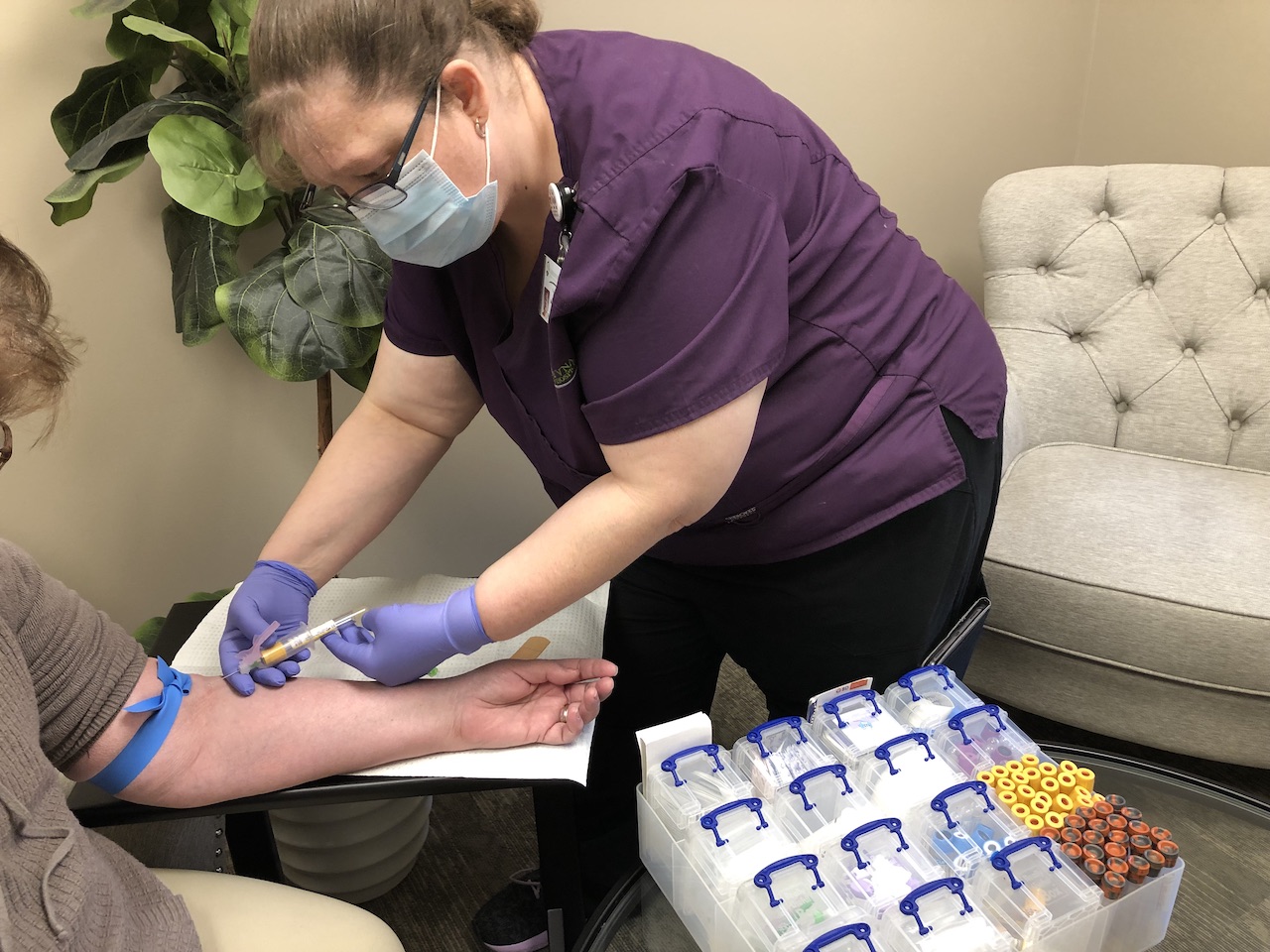
Because ApoB only requires a blood draw, it can be done via licensed mobile phlebotomy—at home or at work.
Benefits include:
No lab visits
Flexible scheduling
Better follow-through on preventive testing
Speedy Sticks offers licensed, at-home blood draws for advanced cardiovascular testing, including ApoB and lipid panels.
✔ Nationwide coverage
✔ Professional phlebotomists
✔ Convenient, compliant collections
Book an at-home blood draw today
Say Goodbye To Waiting Rooms And Long Lines. Speedy Sticks offers at-home testing.